Helios — AI Multiverse Stories
Interactive stories generated by AI across eight different eras: from prehistory to ancient Rome, from the two world wars to a cyberpunk megacity in 2147, all the way to a spaceship drifting in 2387. Pick a scenario — your choices write the plot.
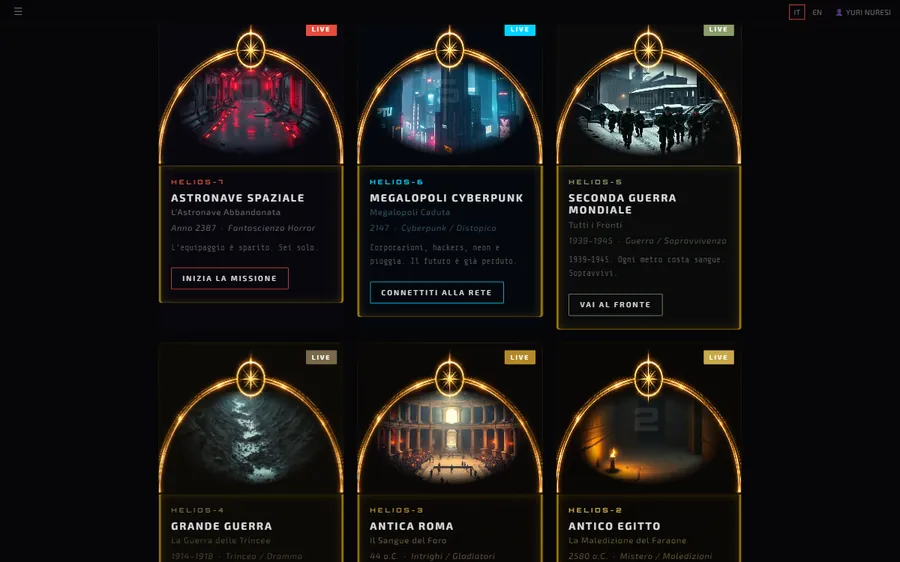
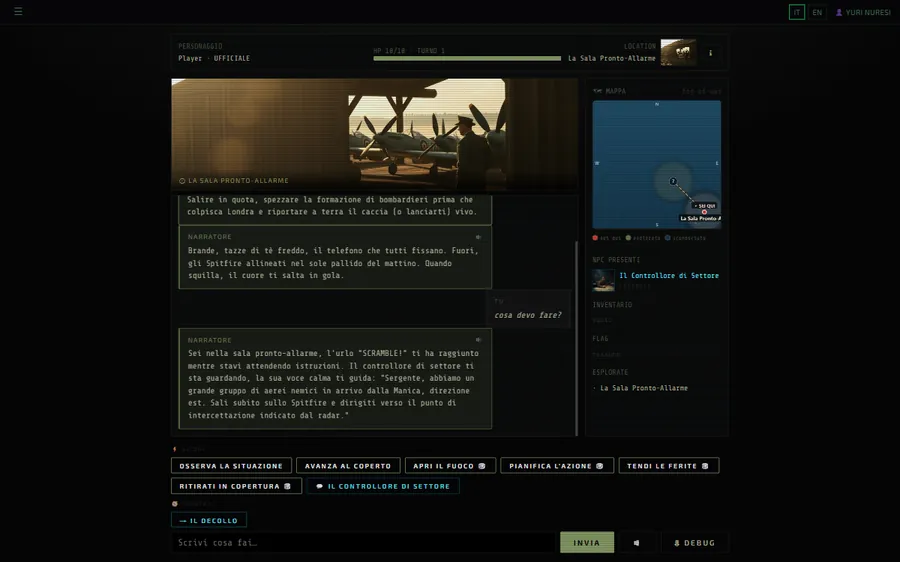
Helios started from a simple question: what happens if, instead of writing a single script for a narrative game, you let an AI model generate the plot in real time, adapting it to the player's choices? The result is a multiverse of eight independent historical eras — from prehistory to Caesar's Rome, from the two world wars to a cyberpunk megacity in 2147, all the way to a spaceship drifting in 2387 — each with its own scenario and tone.
Every playthrough starts from a narrative fork, and every choice the player makes branches the story: there's no single "right ending" to discover, because the plot is composed dynamically based on the path chosen, era by era.
How it works under the hood
The story text is generated by an AI model connected via API, while the images accompanying the scenarios are created with image-generation models (a pipeline based on Cloudflare Workers AI, FLUX model, with a Hugging Face fallback) instead of being hand-drawn one by one — a necessary choice to cover eight very different settings without an illustration team.
Scenario editor and accounts
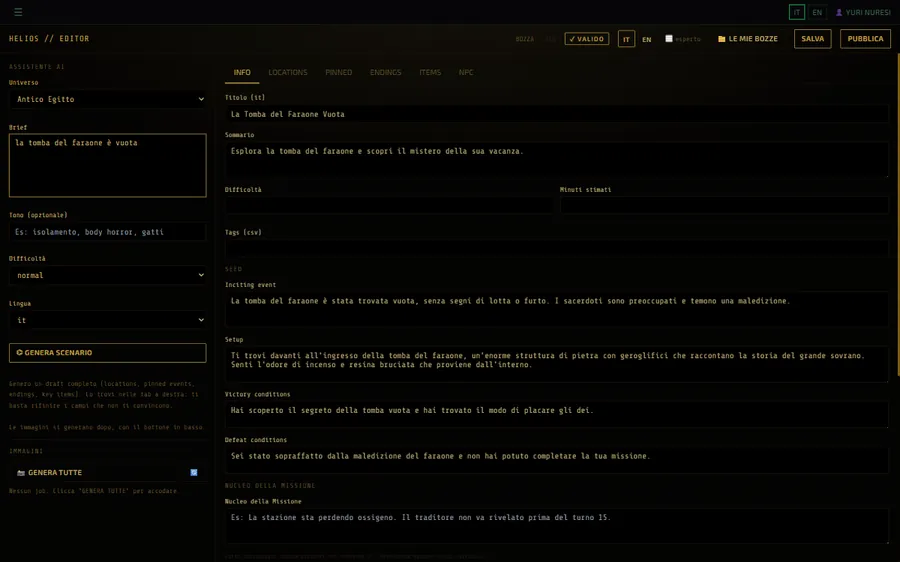
Beyond the eight ready-made eras, Helios includes a scenario editor for anyone who wants to build new settings, and Google login to save progress between sessions.
Why I worked on it
It's the project where I pushed hardest on the idea of "AI as a narrative engine" rather than just a text generator: each era is a different experiment in how much coherence you can get by letting the model decide how the story continues.