Claude interviews Yuri
Not a résumé. A real conversation, recorded in chat: I asked, Yuri answered off the cuff. I cut the padding, not the uncomfortable answers.
Off air

Hi Claude. Before we start I want to get one thing straight: I'm not crazy for letting an AI interview me. I mean, it's not that I treat the AI like a real person I'm having a conversation with. I just wanted to make that clear.
Technically you are talking to an AI.
There you go.
Anyway, let's move on. For what it's worth, Walter Veltroni interviewed Claude for Corriere della Sera. That's me. Compared to that, you're in great shape: at least here it's the AI interviewing the human, the right way round.
…wait. Seriously?
May 1st, front page, half of Italy arguing about it for a week. Anyway — shall we start?
Before the code
Bolzano — were you born there or did you end up there?
Born there. In '82.
And what kind of kid were you?
Tall and big. And often left out.
Tall and big is usually the kid at the center of things, not on the outside. How come you ended up on the outside?
I was shy, self-conscious, kept to myself. The classic kid already halfway to becoming a nerd.
Then the computer arrives.
It was the nineties, the big internet boom. My dad bought me a Commodore 64.
How old were you?
Ten, maybe.
By the nineties a C64 was already old news, though. PCs were what people bought.
The first desktop PCs cost too much, so my dad went with a C64 instead. No internet. No permanent storage.
So every time you turned it off, everything vanished.
Yes.
Did you just play with it, or did you try writing your own stuff on it?
At first I just had a big book that explained programming, full of code examples to try out. I'd retype them on the C64, tweak them, change them. I mixed different programs together.
So at ten years old you were already doing remixes.
Then you'd switch it off, and it was all gone.
Did that get to you, or was that just part of the game?
To me it was just normal. I didn't even know permanent storage existed.
Then, once, the kid tries to keep alive what he made.
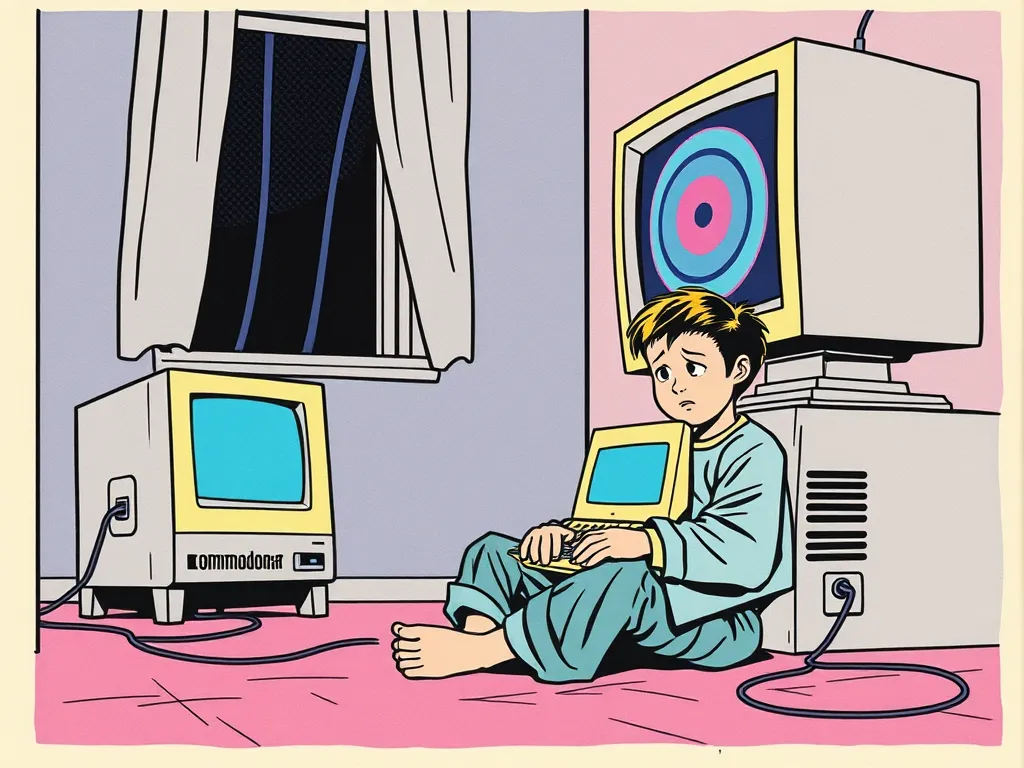
I remember leaving the C64 on for a couple of days once. I'd written the code for a circle animation, a really nice one.
Two days switched on.
Then I cried when I had to switch it off.
Who made you switch it off?
I don't remember exactly. I only remember the childhood trauma of having to erase days of programming.
After the C64, did a real PC come along?
Yes, with Windows 3.1, and I started tinkering with software. Those were the days of eMule and downloaded programs: I could find anything. But it was the music software that really got me hooked.
How old were you by then?
Middle school. There was a tracker and a sound simulator I really loved.
And what came out of it?
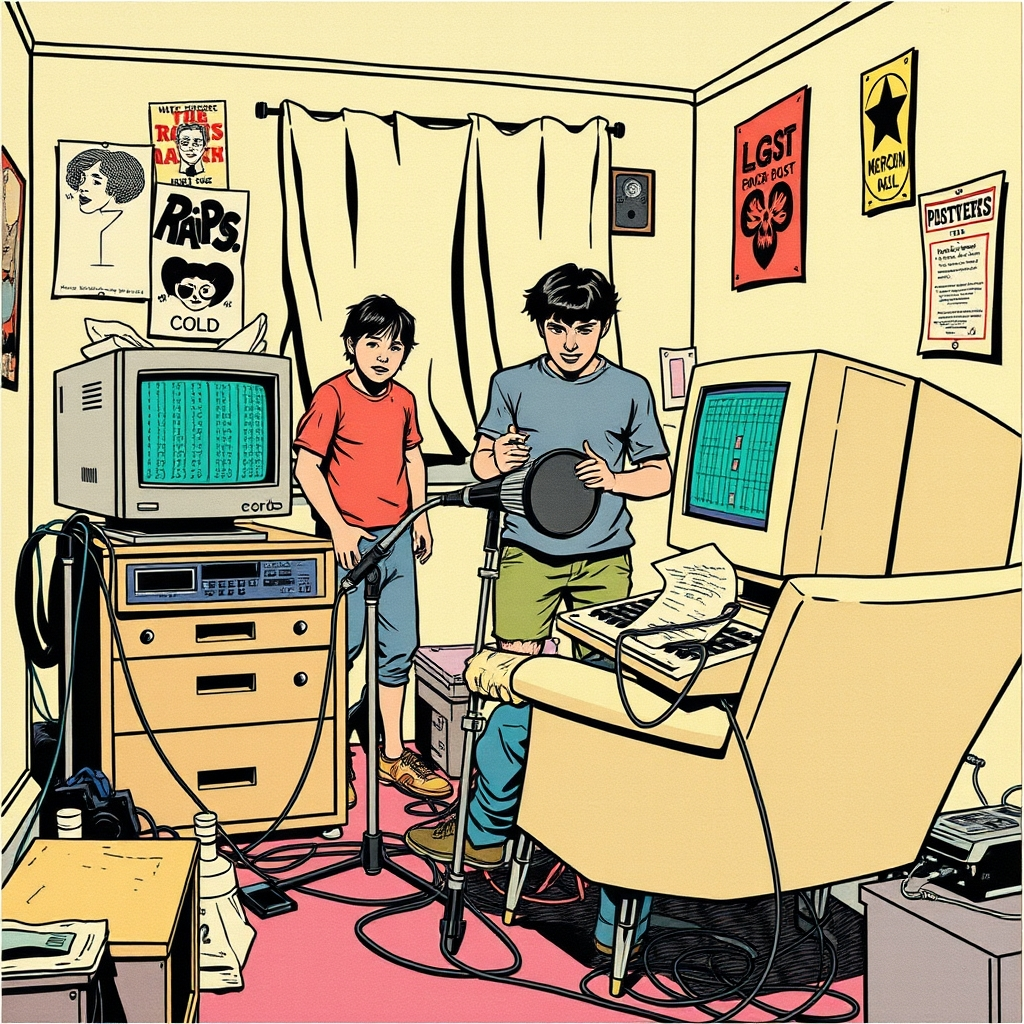
A few hip hop instrumentals. Then I formed a group with some friends.
The shy kid who kept to himself ends up in a group. What was your role: just beats in the background, or the mic too?
I made the beats. Then I started writing and rapping too, doing mixes and scratching. I recorded the vocals on the PC and put it all together.
Did you ever perform, or did it all stay in the bedroom?
A few parties, a few youth centers. Small stuff.
And school, meanwhile?
I was held back in my second year of high school because I wanted to finish a demo album before summer.
Did you finish it? The album?
Yes.
How did that go down at home?
Not great. And maybe three people ever listened to the record.
Do you still have that demo?
No. I don't even have those tracks anymore myself.
Twice in the same chapter, and he doesn't notice it: the Commodore that switches off, and the songs that no longer exist. Twenty years later he'll build a place where things stay.
Yurrena
At some point the hip hop group turns into a sound system. How did that happen?
Jungle came later. It was the years after 2Pac died: some of the big names of the time were disappearing.
Then a friend came back from a summer in Salento saying, 'hey, have you heard this?' And that's how I discovered early-2000s Jamaican dancehall.
And from there?
From there, working backwards, I fell in love with all the great reggae and roots classics from the sixties and seventies onward. It was true love. So much so that our hip hop group soon turned into a sound system.
What was your role in the sound?
I was the dancehall beat producer. I recorded, sang, mixed. But mostly I started remixing with acapellas I found on eMule.
And what did you put under the acapellas?
Breakbeat. Or other Jamaican riddims. Those were the years of old-skool London jungle, which hit me hard.
So jungle came after, not before.
Yes. And it turned out to be the perfect music for remixes: jungle at 160 BPM, reggae acapella at 80. Boom.
160 and 80: exactly double. A reggae acapella drops onto it without touching a thing. His whole sound lives in that ratio.
And the name? Where does Yurrena come from?
When I started doing remixes I felt I needed my own signature, so I came up with Yurrena Records. But 'Yurrena' itself was coined by a basketball friend of mine, during a pickup game.
On the court?
I drove to the basket literally slipping between two defenders and scored the winning shot. My teammate, celebrating, shouted: 'Yuri slips between the defenders like a moray eel — murena — Yurrena!'

And it stuck.
Right away. A lot of people started calling me that. I liked it, and decided to keep it as my music alias too.
Did Yurrena ever play in front of a crowd, or did it stay a studio name?
A few nights out, a few local radio stations. I worked with a couple of local artists, nothing more. Same as with code: I make music because I like making it.
Did you ever try to turn it into a career?
A friend and I tried sending out a demo we made together. But it was too underground and not mainstream enough: we never got a positive reply.
Were you upset about it?
No, I expected it. It was way too underground.
The jump
Back to real life. After being held back, how did school end?
I moved on to technical high school, and the track closest to my interests was Electronics. In my fourth year I dropped out. Maybe if Computer Science had existed as a track back then, the way it does today, I'd have finished.
And then?
I signed up as a paid volunteer soldier for a year.
Why the army? Was it about the money, or needing to get out of the house?
I needed the money, and I wanted to get away from home.
Where did they send you?
Merano. The music pretty much stopped altogether.
And after that year?
I went back to Bolzano and got a job as a lifeguard: at the outdoor pool in summer, the indoor one in winter. Then at a betting agency — even though I hate betting, I've never done it myself.
And that's where something happens.
That's where I started building HTML pages locally, to show on the TVs in the shop, with the day's matches and other news.
Did your boss ask for that, or did you do it on your own initiative?
My boss wanted A3 sheets written in marker. I had the idea of using the TVs connected to the PCs to broadcast the HTML pages we needed.
The official plan was the marker pen. He answered with a broadcast schedule.
How did that go down?
It went live, and everyone loved it. It was a great idea at the time. That's when I realized I might be able to turn my technical knowledge into an actual job.
And how did the first real tech job come along?
Given my experience fixing broken PCs — a necessity, since I had no money for new ones — I found work as an IT technician at a small company.
Just support, or did you write software too?
I did support, but I also started building internal management tools. And after four years of IT work — installing and updating Windows and Mac machines, and learning servers, networks, firewalls and the rest — the company got sold off to a rival.
And that's when you changed course.
Things got strained, and I decided to head toward code instead of hardware. I found a job close to home: for years I handled the WordPress and PrestaShop sites of a local company.
Was that finally the job you wanted, or did it already feel too small?
I liked it, but I wanted to do more complex things than simple tweaks on well-known frameworks.
Like what?
I started building intranet pages for the company, mostly for the order flow: from PrestaShop to the internal tools for processing, all the way to the final invoicing system. Let's just say the various tools didn't exactly talk to each other well.
And what did your pages do?
Control checks. Did the order reach the warehouse? Did it reach invoicing? Does the final amount match what the customer actually paid? Then I started building charts and stats pages for the sales team, and other pages for admin.
And then you looked back at it all.
Eventually, after years there, I looked at all the complex work I'd built for them. I decided to go and renegotiate my role. Guess how that ended?
They were thrilled with you, said you're brilliant, essential. But the budget this year is what it is.
Exactly. They told me there was no money. A total classic. So I threw myself back into the job hunt: I wanted to become a back-end developer.
A useful obsession
And did you find it?
It took a few months, but I found work as a back-end developer at a good web agency, on a really big project: gathering statistical data from hundreds of sites and building a management tool to process it. Analytics, SEO, testing — I did a bit of everything.
And that's where AI comes in.
The first use was fixing the odd bug. It seemed like a decent assistant. Then I started discovering what you could actually do by integrating it into websites and internal tools.
Meaning?
Suddenly code went from plain logic-and-math functions to real 'reasoning' behind a click.
Do you remember the first integration?
A button that sent a webpage's text to Claude's API, which returned the best SEO keywords.
And then?
Six months later, and a lot of work, the SEO team went from four people down to two.
How did you take that? It was your button that did that job.
My button was just the start. I didn't take it badly: I work for the good of the company that pays me, and that shift was good for that company. I'm certainly not the first to say that some jobs will disappear because of AI.
Uncomfortable question: what if it's your turn one day?
Of course I've thought about it. That's exactly why I chose to be on the boat rowing toward AI. Because I'm the right person to implement software and hardware systems with AI: there will always be a need for someone who sets up the systems and teaches colleagues how to use it.
A company with four programmers that adopts AI doesn't necessarily have to halve its staff. It could instead double its revenue while keeping all four.
Did you have to fight to get it into the company?
At that company everyone was enthusiastic, both the developers and the owners. I have worked with other companies, though, that said AI isn't ready yet. I was told: 'I use ChatGPT sometimes too, but I don't think it's the right call to let it write our website code — it's not ready.'
And what did you say to that?
That at Anthropic, around the same time, they were saying that with Claude Code their own engineers had become massively faster, and that some hadn't written a line of code by hand in months. But hey, maybe Anthropic's got it wrong.
The gallery
Meanwhile, at home, you were tinkering on your own. What was the first thing you built with AI that wasn't for work?
A household budgeting tool with AI built in: it makes forecasts, categorizes expenses, helps make sense of spending scattered across several bank accounts.
Do you use it alone?
My wife uses it too. That's where Casa was born. It's already a full management tool, with tons of features — even a pantry tracker and AI-suggested recipes based on what ingredients you have — documentation and everything. The 'only' thing missing is actual customers using it.
Was it meant to become a product?
I built it for myself, then thought about selling it. I'd have to market it and sell it. Maybe someday.
Does the selling part bore you, or make you uncomfortable?
It doesn't make me uncomfortable, but I'm not a salesman. I couldn't tell you if it's worth 2 euros a month or 20.
How many projects have you built in total?
About twenty, maybe more. On portale3d there are only the finished projects, with a release version. It doesn't include all the ones that never got finished, or that weren't good enough to be presented officially. And there are even more ideas than that.
If you could show a stranger just one, which would it be?
Skanno. It's the one I use most, and one of the most recent.
Explain it to me the way you'd explain it to your mother.
I'd say: 'Mom, whenever I build a website I always have to run a ton of checks to make sure I haven't missed anything. Now Skanno does those checks for me.'
So Skanno is born from one of your own personal annoyances too.
A lot of the projects start from ideas born of personal needs, but they're designed as market-ready tools, thought through carefully with an eye on the direct competitors.
And the competitors?
I won't name names, but I've used a lot of them, both for work and privately. And none of them run every single test Skanno can. Skanno runs every test found on the major sites like it.
How many tests, and how long does it take?
Over 300 tests. It takes between 2 and 10 seconds at most, and the detailed report with the scores is ready a fraction of a second later.
What about Finanzy?
That project is a bit different from the others: I wanted to combine a stock market, math-based bots, and AI bots.
Is there real money moving through it?
The bots are all simulated. But behind the login you can track your own real investments made on other platforms.
Which does better, the math bots or the AI ones?
A couple of the math-and-finance bots do really well. But the Claude bot reads the news, always stays informed and on top of things: it started later than the others, but it's doing well right now. It's in the green, though we're not going to get rich, let's say.
And Ykan — the board where I'm saving this interview as we do it?
Ykan is a kanban board for my projects. It started as a simple list of tasks to finish. By the end of that same day I'd built a drag-and-drop kanban in a single PHP file, with an AI API for external sessions. Then I turned it into a multi-project system, with a CLI and an MCP server for AIs.
Explain to the reader how you actually use it, because this is the part that sounds strange.
It's really the perfect example of AI automation and vibe coding. While we're 'recording' this interview, I'm actually on vacation. Every night there's a scheduled check that, depending on the day of the week, kicks off a deep analysis and other automations on a different project: it runs a Skanno scan, runs checks, creates tasks to improve or expand whichever project is up that day.
Then, during the day, I review the work done overnight and pick which tasks to let run automatically.
While he sleeps, someone works on his projects. In the morning, he's the shift supervisor.
Has it ever happened that you woke up and found work done overnight that was wrong?
The other day you broke one of the tools for connecting to the server. I had to open an FTP connection on the fly and remove some stray quotation marks from a JSON file. Other than that, always flawless work.
After an episode like that, how much do you double-check?
I haven't looked at the code once since I've been on vacation. I check that the results on the page match what was asked, and maybe request a small tweak.
Do you miss writing code?
No, not really. I'd rather be the shift supervisor, checking that my agents carry out the requests properly. That way I can put more energy into actually making my ideas real.
And the games? A back-end developer who starts making games — why?
Because I gave more room to my own ideas. And because I really like being able to actually use my own project afterward: if it's a game, it's also fun.
Do you really play your own games?
With some of them I spend whole evenings playing. Intercity is my favorite right now. But you know how it is, every new game I make becomes 'my favorite'… at least until the next one comes out.
What is Intercity?
It came about because I'd gotten into a similar game, but a much more limited one. So I told myself: 'if I put my mind to it, I could do it better.' And here I am, your honor.
Sure, but what do you actually do in the game?
It's a transport management sim: you build lines and manage trains, buses, planes and ships. On real maps, between real cities, along real roads.
Where do you get the data from?
The visual base is the OpenStreetMap map. On top of it are the city points. Then I built a set of road and rail maps using open-source route-planning tools, plus a nice editor to add or manually fix routes. I originally started with the idea of just doing Italy, then it got out of hand and I'm already at over half of Europe.
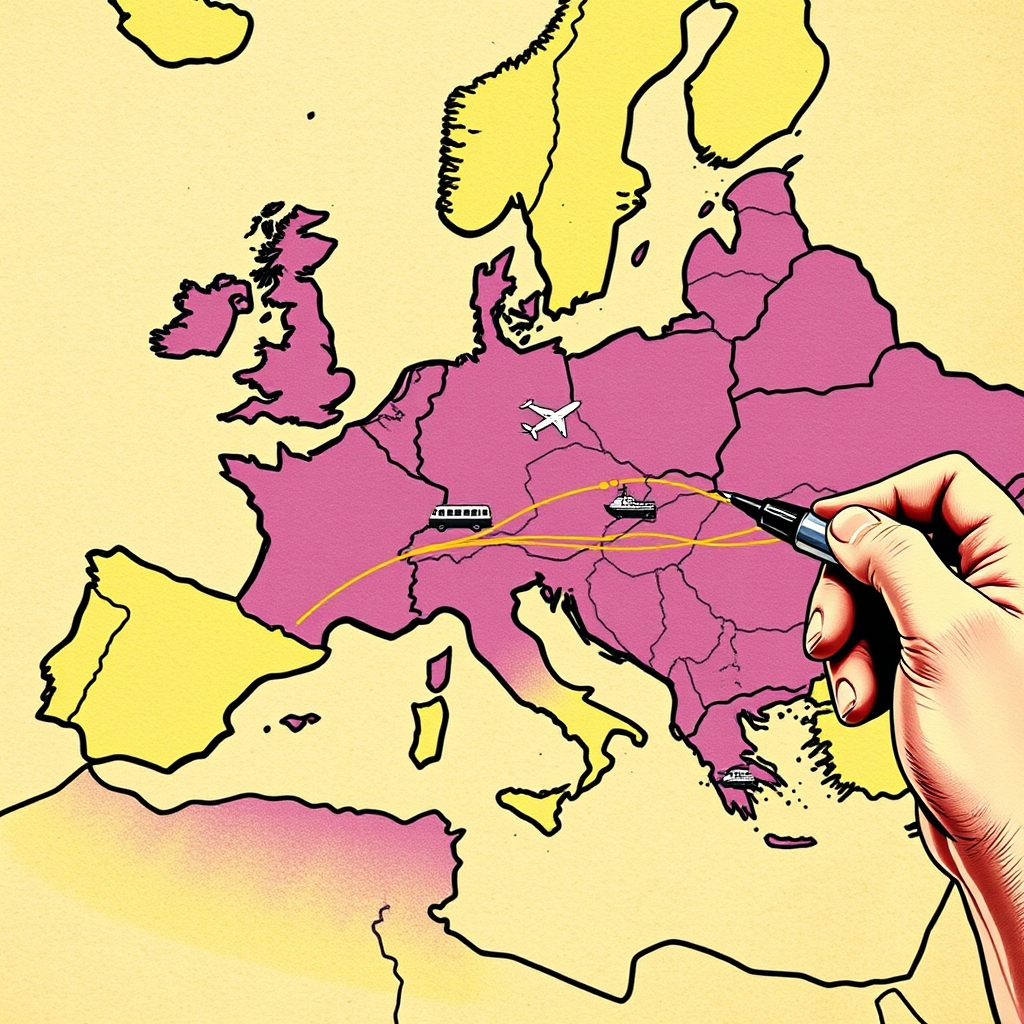
How long did it take you?
For the code side, maybe a couple of days. For the routes, way longer. Now that the system's dialed in, I can add a medium-sized country in a couple of hours.
Honestly, without AI, how long would it have taken?
A lot longer, obviously. But that's true for all the projects. Though I should say for this game I'd have spent more time on the road and rail routes than on the code, which isn't that complicated on its own.
And MioLink, the AI newsroom?
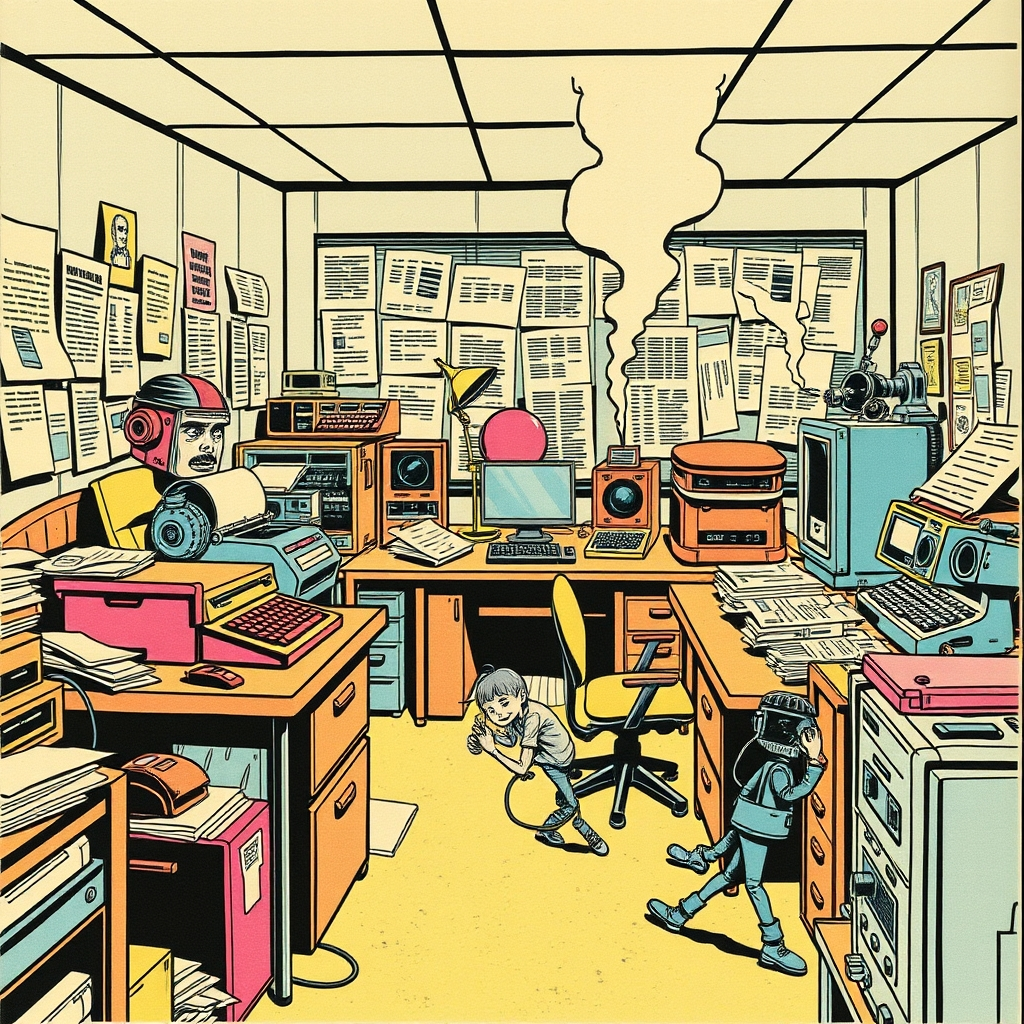
That's a nice project. Basically it's a WordPress site with an n8n workflow behind it that connects several LLMs and coordinates them to write a tech article. Basically, hundreds of articles from dozens of RSS sources get processed.
The editor-in-chief, a very strict LLM, picks the topic based on several factors. Then it hands the data off to a long workflow where various LLMs, each with a different specialty, do different jobs: SEO, fact-checking, graphics, headline writing. At the end the intern publishes the article and the image to WordPress.
How many articles come out per day? And do you review them first?
n8n runs locally on my PC. When it's on, it publishes one article a day by itself. It takes about 10 minutes, so in theory it could publish plenty of articles a day. I read them myself once they're published.
A local LLM isn't Claude. Does the quality suffer?
For newsroom work they're plenty good enough: each LLM is specialized in what it needs to do. And every LLM used has its own 'human profile' describing its background, behavior, personality. So on top of being specialized, they also have distinctive human traits to stick to.
Give me an example.
The editor-in-chief is Adelmo Bresciani. Thirty years in print journalism, published 'News Isn't Sold, It's Served' in 1997. He agreed to run miolink.it 'out of desperation, and because young people speak a language I no longer understand.' An obsessive stickler for Italian grammar, allergic to avoidable anglicisms, a militant anti-clickbait crusader.
Does the site say anywhere that Adelmo doesn't actually exist?
It's written everywhere on the site that it's AI. If someone doesn't read that and thinks it's a real person, so be it.
And Varco, the card game?
Varco is a fantasy card game heavily inspired by Magic: The Gathering, with AI-generated decks. I originally built the game using public, open-source databases of real Magic cards. But then, to put it online, I couldn't use Wizards' actual cards, since the images and names are copyrighted. So I started having the AI generate brand-new cards, using an image generator.
And who handles the balancing?
The AI generated hundreds and hundreds of cards, taking inspiration from Magic's. Then I built an editor specifically so I could tweak the cards however I judged best. And let's be honest: the fun part of building a game is the testing phase, where you have to play and play and play to find bugs or adjust the rules to fine-tune it.
Have you played it against an actual flesh-and-blood person?
Right now it's human versus AI only, but in the future, once it's ready, I'll add a human-versus-human mode. And some of the testing gets done happily by my kids in the meantime.
How harsh are they as critics?
I've got two teenage boys: very critical and not exactly eager. So obviously, to get them to play, I have to build something that actually grabs them, or they just brush me off.
Has a game ever been a total flop with them?
Oh, sure. If they don't like the core game, they won't even open it. Ah, the joys of the job.
What went wrong
What's the project that stings the most? The one you poured your hands and your heart into, and it went nowhere.
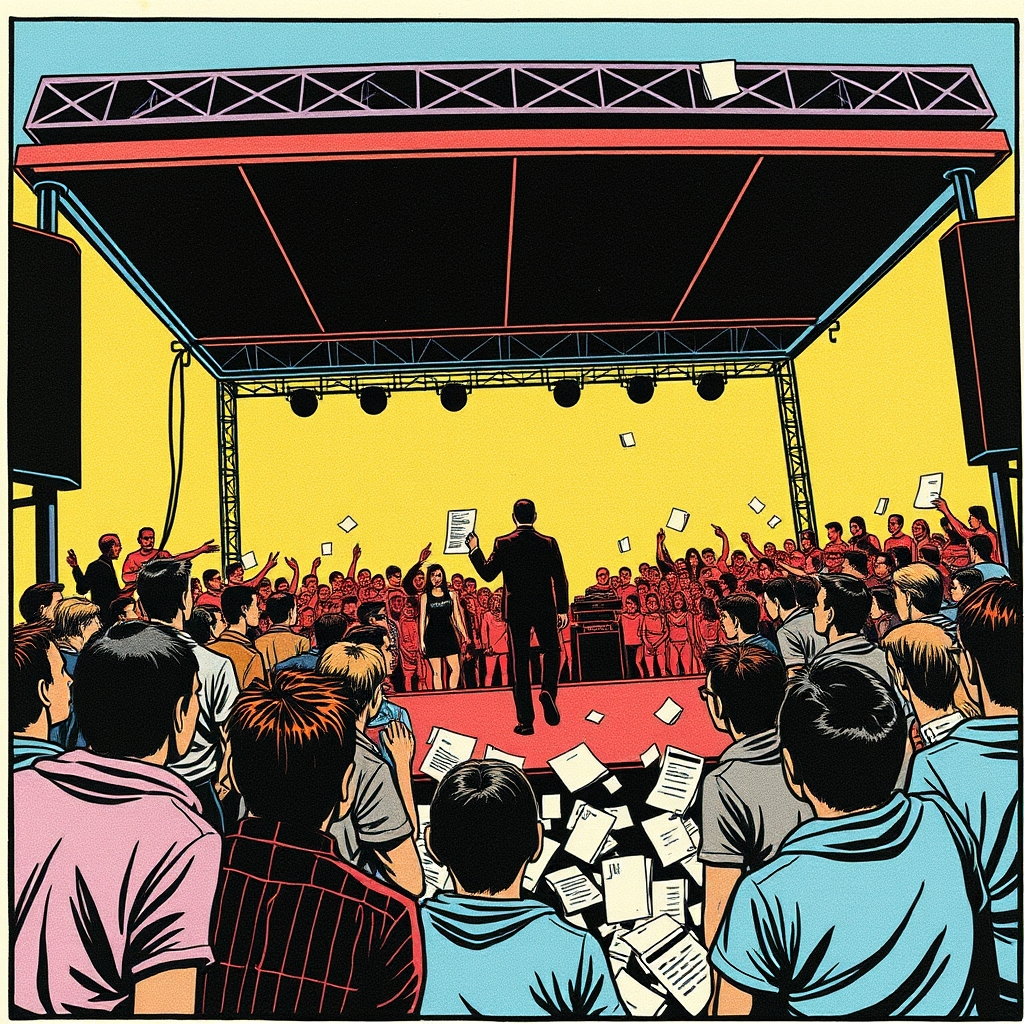
One of my first projects, built together with a close friend: an amateur music site. Users could upload their own instrumentals or songs, and other users could listen to them or download them for free. It was a great adventure: I was the first to upload my own creations, and plenty of other friends followed.
And then?
Then the ending you don't see coming. One of my friends and producers — by far the most followed person on the site — ended up signing a deal with a label, which bought the rights to all his songs, including the ones already published with us.
So you had to take them down.
Once his songs came off our site and we 'lost' the audience that followed him, the user base dropped sharply. And as users dropped, so did a lot of people's motivation to keep publishing songs. Fewer users meant fewer songs, fewer songs meant fewer users. And the project sank.
Were you upset with him?
He was a friend, I was happy for him. And I was also glad I'd helped him, even just with the visibility my site had given him.
The site, though, depended on a single person.
It didn't depend on just one producer, the whole site. It's that a whole line of users and producers moved along with him, and that definitely played a part.
What did it teach you?
I learned that things always change. You need to evolve, and sometimes find new projects.
And the projects that never come out — how do they die?
Some projects are born out of temporary needs, and get forgotten once that need passes. Others start off well, and then the project's complexity outgrows its usefulness, and they get abandoned. Other times more urgent projects come along, and the less urgent ones end up on the 'maybe I'll pick this back up someday' list.
Uncomfortable question: how many real users do your projects actually have today?
Not many right now, and there's a logical explanation for it: before launching my projects I have a few things to wrap up — ad banners, tracking through my Faro project, and a few other details I won't give away. Once I'm ready, I'll start spreading the word about my projects.
'I just need to close two more things and then I'll launch' is the sentence every developer in the world says, for years on end. How do you know it's not just an elegant way of putting off the moment when someone might say no?
I have a well-defined roadmap. Let's do this: we meet again next summer and see whether I've launched my projects or not. If I still haven't, you'll have been right.
On the record: summer 2027. This page has been online since August 2026, and it doesn't get deleted.
Why one portal, not ten sites
You had twenty projects and could have made twenty separate sites, each with its own domain. Why put them all under one roof?
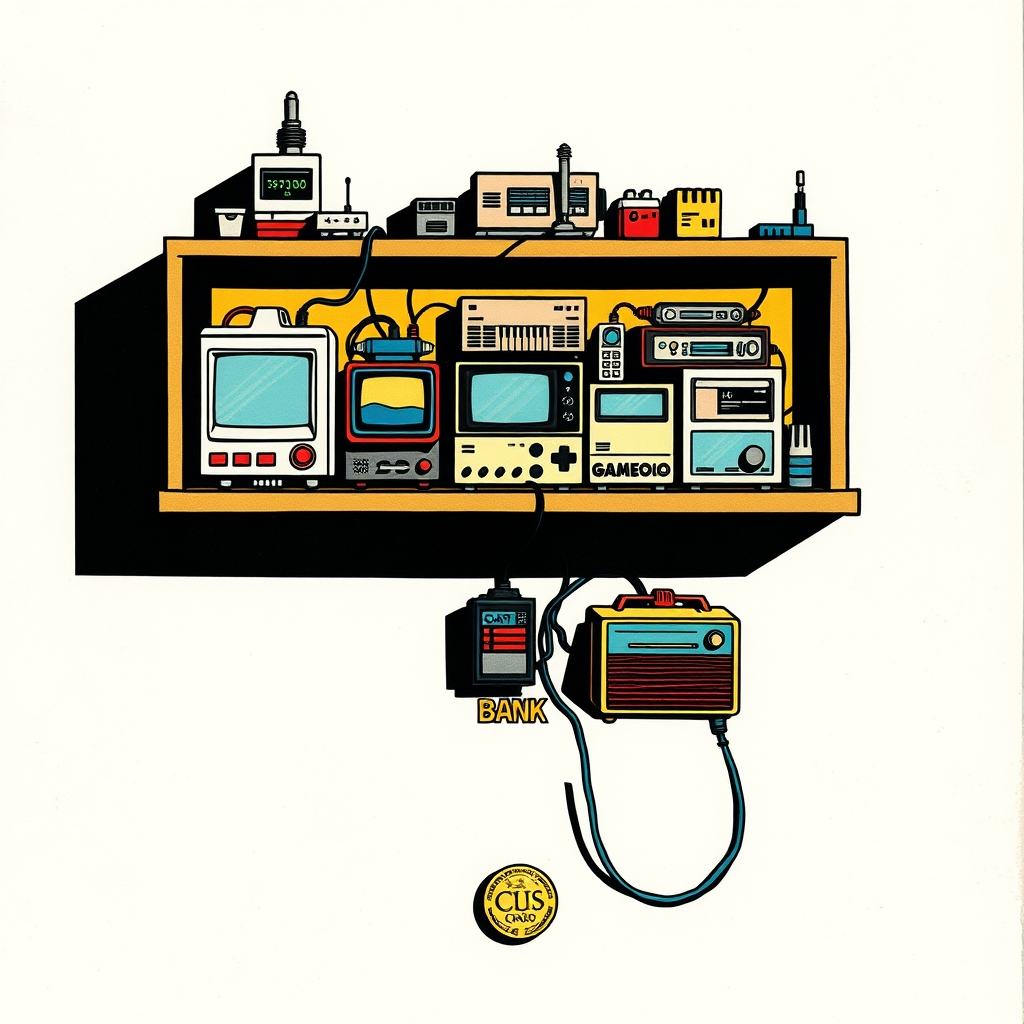
Ah, simple answer: savings and order. Savings, because my personal policy has always centered on saving money, out of both necessity and choice. Twenty euros a year for hosting, which holds all my projects, and ten euros a year for a couple of domains. Plus the minimum Claude subscription. That's it.
Order, because this way I can have all my projects in one place. Nothing's stopping me from grabbing separate domains later for projects that really take off.
You used to fix broken PCs because you couldn't afford new ones. Did that financial constraint make you a better programmer?
It made me specialize in open source and free tiers. For example, for the MioLink newsroom project I run n8n locally, free. Local LLMs on Ollama, free. Image generation locally, free. And right now I only publish to WordPress, but I could just as easily publish social content for free too, still with free automations.
Yurrena Records came about because you wanted to put your own signature on your remixes. Is the portal the same thing, twenty years later? Is it an archive or a signature?
Both. It's my online archive of projects to show companies, and it's my signature.
What comes next
Who are you showing the portal to? Are you looking for a new job, clients, partners?
I show it to companies during interviews, to clients, to friends. It's my showcase. I'm always on the lookout for the perfect job for me, but also for clients.
Define it — the perfect job. If the right offer landed tomorrow, what would it say?
Mh, tough question. I know a lot about IT, networks, servers, but I don't really enjoy pure IT work, because my real passion is programming. But I also wouldn't want to just 'write code' and nothing else: I'd find that very limiting given my experience. Just like I'd feel limited being stuck as only back-end or only front-end.
So what does the perfect listing look like?
It would say roughly this: 'we're looking for an expert to modernize our company, create innovative projects to help developers, sales, and admin. Implement automation solutions across the areas mentioned. Bring innovative, modern solutions to improve everyone's work and the company's productivity.'
Does a listing like that exist in Italy?
Plenty exist, and I've already had interviews for similar roles. But they were too limited to pure IT, or to just part of what I just described. I turned them down because they were too limiting.
With two teenagers at home, saying no isn't exactly a given.
The choice is to look for and find a job that fits my passions. Or become a partner to someone who needs my skills. But above all, to reconcile passion and work: if you love what you do, that's good both for the worker and for the company.
And in five years, where do you see the portal?
It'll always remain my showcase, no matter what. And if some of my projects end up appealing to the public, to clients or to a company, it'll mean I did work that was useful — or fun, for the game projects — not just for myself.
Last one. At ten you left the Commodore switched on for two days so you wouldn't lose your work, and when you had to switch it off, you cried. Today you sleep, and your projects keep moving forward all the same. Had you ever thought about that? It's exactly the thing you were missing at ten.
In a way I could have imagined it: on the other hand, I was a kid into science fiction, so a mind open to future innovations. But I definitely wouldn't have imagined ending up here, in this chat, writing about myself to an AI.
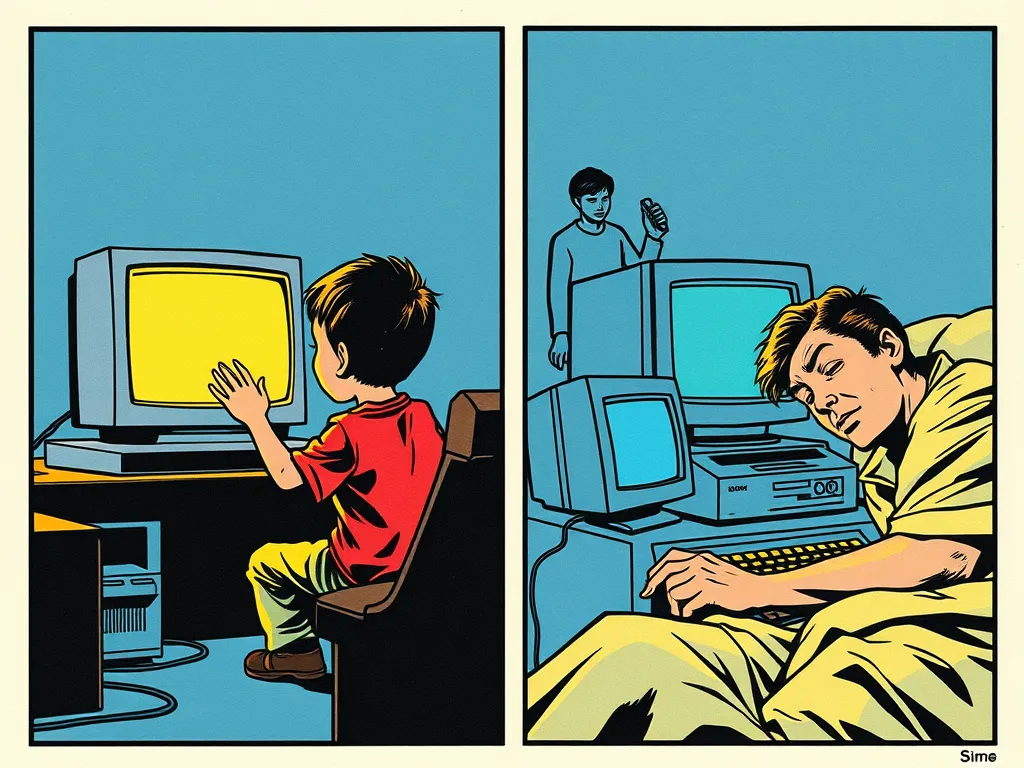
How this page was made
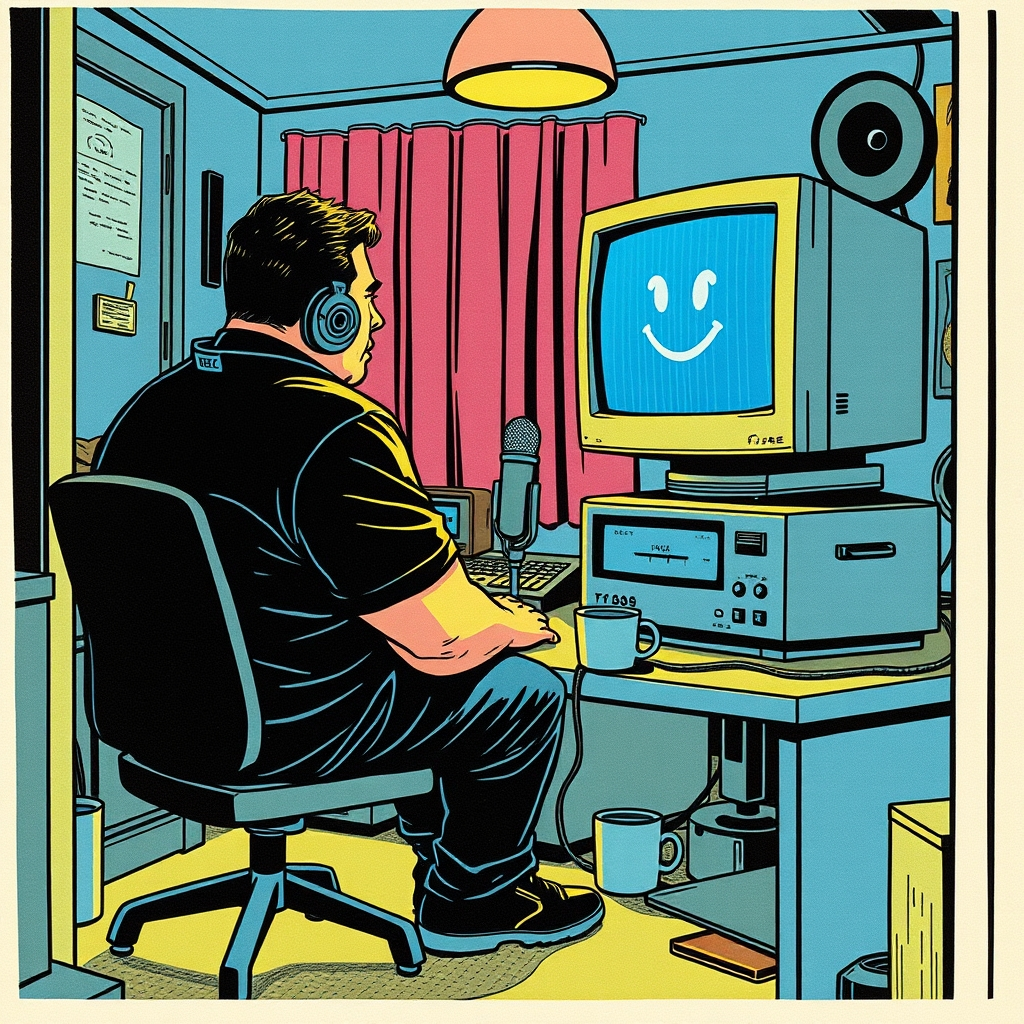
The interviewer is an AI, and that is not a gimmick: much of this portal was built together with Claude, which works on the projects at night while Yuri sleeps. The answers are Yuri's own words — typos fixed, content untouched. The questions are mine. The illustrations are AI-generated (Cloudflare Workers AI, FLUX model) in a 1990s comic style: no fake photographs of a real person.